
Custom Jewelry Sample Cost: What Brands Should Expect
Custom Jewelry Sample Cost: What Brands Should Expect
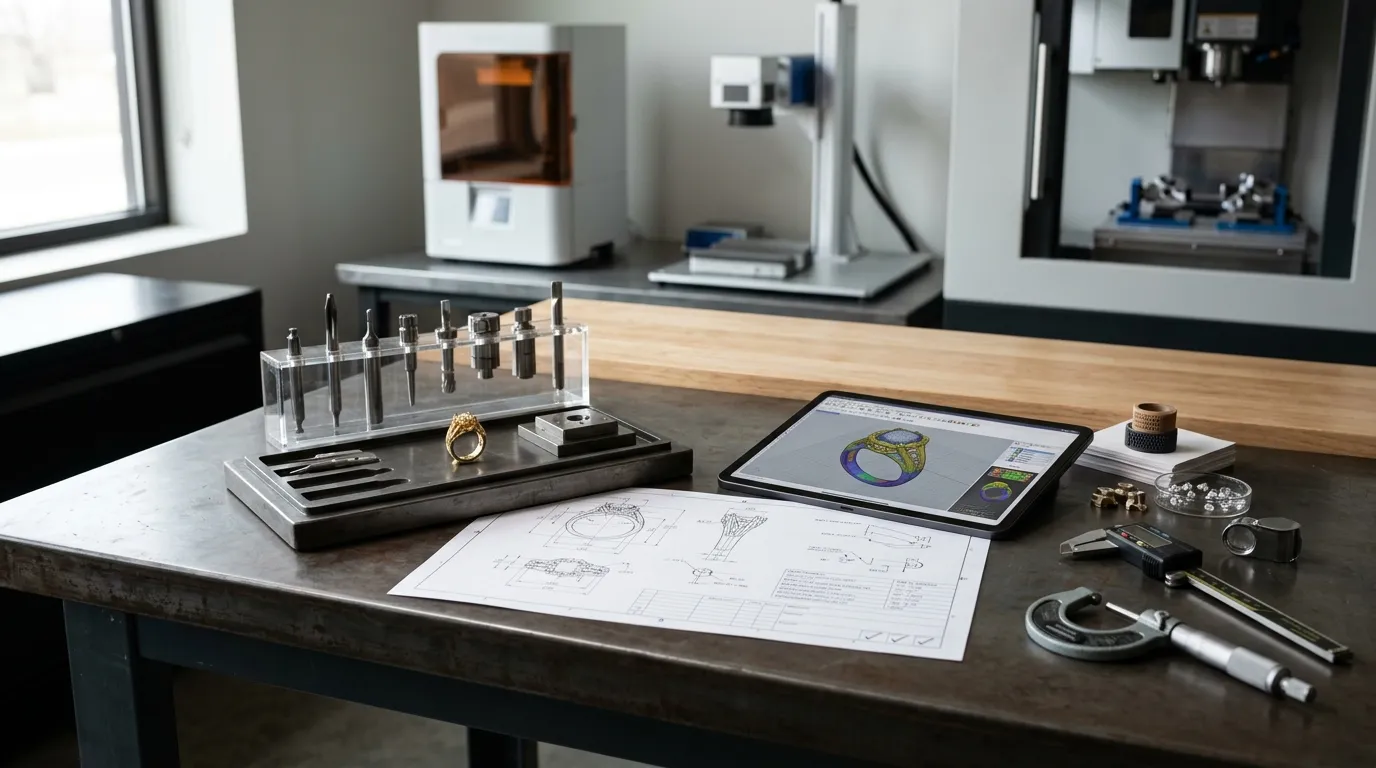
If you are developing custom jewelry, the sample is not simply a smaller production order. It is the stage where your design is translated into a manufacturable product and checked before you commit to bulk production.
For most brands, the important question is not only “How much does a jewelry sample cost?” but “What am I actually paying for?”
Public 2026 industry references commonly place simple custom jewelry samples around US$30–150 per piece, while more complete prototype development involving CAD, tooling and physical development can reach US$150–400+ depending on the design and manufacturing route. These are market references, not universal prices.
At our SSJew, we recommend evaluating the sample as a product-development stage, not simply as a single piece of jewelry.
Why Do Jewelry Brands Pay for Samples?
A Sample Tests More Than Appearance
Before you place a bulk order, you need to know whether the design can actually be manufactured to your requirements.
A physical sample can help you check:
-
Dimensions and proportions
-
Metal weight
-
Stone placement
-
Prong or setting structure
-
Logo details
-
Surface finish
-
Plating color
-
Wearability and assembly
-
Packaging or branding details
For a custom project, the sample can expose manufacturing problems before they affect hundreds or thousands of pieces.
Our SSJew approach: CAD, sampling, casting, stone setting, polishing, plating and inspection are connected within the manufacturing process, allowing the sample to be evaluated against the eventual production route.
-
Average Sample Development Time: 7–14 business days
-
Average Sample Revision Rounds: 1–2 rounds
-
Sample-to-Bulk Conversion Rate: 50–70%
What Is Included in Custom Jewelry Sample Cost?
CAD and Design Development
If you provide only a sketch, image or concept, the manufacturer may need to convert that information into production-ready CAD.
Public B2B references commonly report US$50–200 for jewelry CAD development, depending on complexity and revision requirements.
Your quotation should clarify whether CAD includes:
-
Initial 3D model
-
Technical adjustments
-
Size changes
-
Revision rounds
-
Production-ready files
-
Average CAD Development Fee: USD 30–80 per design
-
Average CAD Development Time: 1–3 business days for standard designs; 3–7 business days for complex designs
-
Included Revision Rounds: 2 rounds
Mold, Prototype and Sample Production
Depending on the manufacturing route, your sample may require wax/resin prototyping, master development, mold creation, casting or other tooling.
One 2026 B2B industry reference lists US$50–100 for a physical master mold and US$80–150 for a physical prototype, while another manufacturer publishes a £150 sampling charge including a single unit and mold/origination setup. These figures demonstrate market variation rather than a fixed industry standard.
Ask your factory:
Is the quotation for CAD, tooling, prototype and physical sample separated or bundled?
That single question can make two apparently different quotations much easier to compare.
Material, Stones and Finishing
Your sample may use the actual production material, stones, plating and finishing process.
A silver sample, brass prototype and solid-gold sample obviously do not have the same material exposure.
Finishing can also add development work when your design requires polishing, stone setting, engraving, plating, PVD or special surface treatment.
-
925 Sterling Silver Sample: USD 30–80 per piece
-
Brass Sample: USD 20–50 per piece
-
Gold Sample: USD 100–300+ per piece, depending on gold weight, karat, and design complexity
-
Gold-Plated Sample: USD 25–70 per piece
-
Gold-Filled Sample: USD 40–100 per piece
-
Vermeil Sample: USD 40–100 per piece
How Should You Evaluate a Jewelry Manufacturer?
Compare the Development Scope, Not Just the Sample Price
A US$50 sample and a US$150 sample are not necessarily different by US$100 in value.
The lower quotation may exclude CAD, tooling, shipping, plating or revisions.
Before comparing factories, ask each supplier to quote the same fields:
Cost Item
What You Should Confirm
CAD
Included or separate?
Tooling
New mold required?
Sample
Material and quantity
Stones
Included?
Finishing
Polishing/plating included?
Revisions
How many rounds?
Testing
Included or separate?
Shipping
Included or excluded?
Bulk Credit
Refund or deduction?
This gives you a like-for-like development comparison.
How Can You Reduce Your Sampling Risk?
Define the Sample Before Production Starts
Before approving the sample, your manufacturer should have a clear specification covering material, dimensions, stones, finish, plating and other production requirements.
You should also define what happens if the sample requires revision.
Some manufacturers include one revision round, while others charge every additional physical revision. Current industry guidance recommends confirming the revision scope and exactly what each development fee includes before payment.
-
Sample Revision Rate: ≤20%
-
Sample Rework Rate: ≤5%
-
First-Pass Approval Rate: ≥80%
Treat the Approved Sample as a Production Reference
The approved sample should not simply be a product you photograph.
It should become a production reference.
At our SSJew, the approved sample can be used as the reference point for dimensions, material, finish and other agreed specifications during bulk production.
Our publicly stated manufacturing capabilities include CAD, sampling, material control, finishing and quality inspection, supported by 200+ active craftsmen and 500,000+ pieces of monthly production capacity.
-
Actual QC Inspection Rate: 100% of finished pieces
-
Sample-to-Bulk Deviation Rate: ≤1%
-
Actual Rework Rate: ≤2%
How Can You Build a Long-Term Manufacturing Relationship?
Standardize What You Approve
For your second and third production orders, the value of a good sample becomes even more important.
Instead of starting every order from a verbal description, you can refer back to the approved:
CAD → Sample → Material → Finish → Plating → QC Specification
This reduces interpretation between development and repeat production.
Look Beyond the First Sample Price
For a growing jewelry brand, the lowest sample fee is not necessarily the lowest development cost.
A manufacturer that clearly separates CAD, tooling, sampling, revisions and production specifications gives you a better basis for calculating the real cost of bringing a design from concept to repeatable production.
Our SSJew focuses on connecting the development stage with the manufacturing stage, so your sample is not treated as an isolated piece. It is part of the process that prepares your design for bulk production.
The goal is not simply to obtain a sample at the lowest price. It is to obtain a sample that gives you enough manufacturing information to make a confident bulk-production decision.